

A leader’s leadership style is a crucial aspect of business as it impacts a company’s systems, relationships, culture, employee well-being, and so much more. In essence, leadership style is a compilation of a leader’s methods, personality, behaviors, tendencies, and characteristics when leading and guiding a team. Leadership styles can vary depending on the organization, team, industry, leader, etc.
Determining and executing our leadership style can make or break our success as a leader, so it’s imperative that we find our style based on our natural values, and lead with them every day for the sake of our team, our reputation, and our impact, which should always be positive.
It is important to learn the common leadership styles so that we can pinpoint which ones we (and our organization) align with and which ones we should avoid due to poor fit.
Choosing a leadership style can be difficult if we do not understand our core values. Core values are principles that guide us through our daily lives – they are at the root of our behaviors, motivations, relationships, beliefs, and more.
Values-driven leadership means leading with purpose and integrity, aligning actions with values, and working as our most authentic and trustworthy selves. When we indulge in our values at work, we become more passionate, committed, and purpose-driven, which impacts our team in powerful ways.
For us to be value-driven leaders, we need first to define our core values before we can communicate them to our team, incorporate them in our procedures, and lead our employees by example.
There are multiple ways to identify our core values. Since these values already govern our day-to-day lives, we should instinctively be able to choose which values resonate with us most. The easiest way to do this is simply by reading a list and narrowing down the ones that resonate most to 6 or 8 personal values. These are our core values.
Some common values leaders resonate with most and choose to help guide them to manage their teams effectively are influence, vision, passion, empathy, resilience, and humility.
James Clear, author of Atomic Habits, has compiled a phenomenal list of common core values in leadership. Check them out and choose your values here.
If using a pre-made list doesn’t jive with you, there are other ways to identify our core values. We can consider people in our lives who we admire and pinpoint what qualities they possess that make them so admirable. Compile a list and choose which ones you also live by. You can also start with your team and determine what is most important to you, your team, and their success. The values that you find will match your intentions and also give you a leg up in incorporating the values at work, as you already know that your team values (or needs) them too.
For example, the seven core values I’ve chosen for my personal brand are dependable, committed, broad-minded, connection, excellence, optimism, and reflective. For me, these values promise my clients a standard of care. They know what to expect from my work, how I work with others, and what influence I have on projects. I’m dependable as I always achieve results promptly, I’m committed and dedicated to getting the job done, I’m broad-minded in how to create results from big ideas, I nurture connections to allow for honest communication and collaboration. I pledge to execute excellence when perfection isn’t practical, I vow to stay optimistic and keep a positive frame of mind among challenges, and I reflect at every stage to ensure end products are tailored and true to my clients.
Core values can be used in many ways to guide your work, team, personal endeavors, relationships, and more. We only need to make sure we have a firm grasp of our values and consistently practice executing them.
After identifying our core values, we can then choose a leadership style that works with our values. It is important to choose values before a leadership style as choosing a style first could stray us from our values or force us to lead in a way that is not authentic.
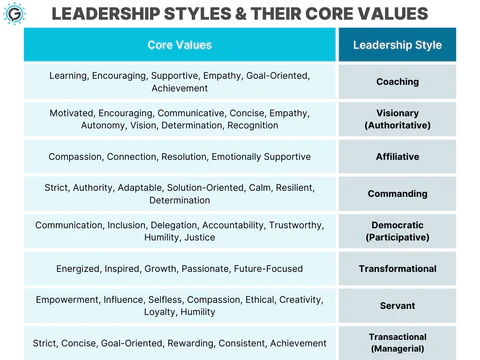
After defining our core values, we can then use them to narrow down leadership styles. Begin by eliminating styles that do not mesh with your values or your team, then choose a style that incorporates as many of your core values as possible. Below is a quick guide matching leadership style to core values that can help in choosing one style.
Looking for ways for you and your team to exercise your leadership style? Consider the following comprehensive meeting modules to hone your team’s skills while leading an impactful and efficient meeting.
Coaching leadership style: Strengthen Skills: Play Ball from the team building series
Visionary (Authoritative) leadership style: Enhanced Focus: Power of Ten from the workplace productivity series
Affiliate leadership style: Build Relationships: Breaking Bread from the employee empowerment series
Commanding leadership style: Optimize Performance: Crew Skills from the team building series
Democratic (Participative) leadership style: Shifting Perspectives: The Big Picture from the leadership development series
Transformational leadership style: Cultivate Presence: Owning The Stage from the leadership development series
Servant leadership style: Power of Positive Influence from the employee empowerment series
Transactional (Managerial) leadership style: Get Organized: Mise en Place from the employee empowerment series or Maximize the Minutes from the workplace productivity series