

Have you ever attended a meeting that was so ineffective that you just had to tell someone about it and take half an hour or more to mentally recover? If so, you have experienced meeting recovery syndrome (MRS).
When meetings take up a significant amount of time and cover important topics, they mustn’t be highly ineffective to the point where employees feel upset and their productivity is damaged.
Meeting recovery syndrome is defined by Smart HR as “the mental and physical exhaustion one feels after spending too much time participating in video or in-person meetings.” Although MRS can occur after a typical meeting, it is most common and disruptive for people who attend unproductive and inefficient meetings. Those who experience meeting recovery syndrome need to take a significant amount of time to gather their thoughts and process disappointing meetings, often by discussing them with colleagues.
A meeting deemed as “bad” tends to stay with employees for hours after the meeting has ended. In this time following the ineffective meeting, employees feel negative effects that shape what we know as meeting recovery syndrome. While some people feel different things after poor meetings and some recover in different ways, some of the most common “symptoms” of MRS are the following.
Meeting recovery syndrome is often accompanied by “meeting bloat” which encompasses the uncomfortable feeling and unnecessary fatigue that occurs when more people continue to get added to the meeting when it is not necessary.
Parkinson’s Law, which is the idea that “work tends to expand to fill whatever time is allotted to it” also tends to be a prerequisite to meeting recovery syndrome. Therefore, long durations with sparse agendas make for ineffective meetings that leave employees with MRS.
According to Smart HR, only 30% of meetings are productive, meaning 70% run the risk of leaving attendees with MRS. Unproductive meetings can make attendees feel as though their time is not valued which leads them to lose faith in the integrity of future meetings.
Poorly planned meetings and lax meeting agendas are huge causes of MRS as Parkinson’s Law can thrive and employees disengage with the limited content they are provided.
Meeting recovery syndrome is also particularly common for those who attend back-to-back meetings with little or no time to reset and process in between.
Lastly, when meeting facilitators do not allow time during meetings for collaboration, MRS can creep in. Colleagues must problem-solve, discuss, and support each other in meetings so that they feel progress has been made when the conference comes to an end.
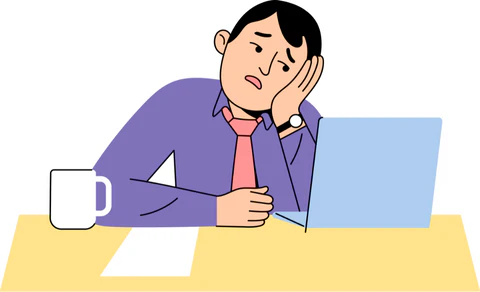
We can’t talk about meeting recovery syndrome without addressing virtual meeting fatigue, or “Zoom fatigue.”
Virtual meeting fatigue describes the tiredness professionals feel when they regularly attend online work meetings. Compared to meetings held through other communication media, video conference meetings are the most exhausting. Virtual meetings can take quite a toll on employees, leaving them feeling both mentally and physically drained.
Professor Jeremy Bailenson, founding director of the Stanford Virtual Human Interaction Lab, explains the phenomenon well as he discusses how we have taken the natural human conversation and made it into something that requires much more thought. “You’ve got to make sure that your head is framed within the center of the video. If you want to show someone that you are agreeing with them, you have to do an exaggerated nod or put your thumbs up. That adds cognitive load as you’re using mental calories in order to communicate.”
Because online meetings require more visual processing and attendees deal with much more stimuli, they can be particularly draining compared to in-person meetings. Attendees often feel pressured to fill silence, connect with everyone on screen, and balance staying engaged with taking notes.
Some people can feel that virtual meetings are invasive, thus causing further discomfort for attendees.
Professionals on virtual calls must also work harder to process and understand non-verbal cues and social cues from colleagues and make meaningful connections without being physically together.
Women and introverts tend to be more affected by Zoom fatigue than men and extroverts. Women have more “self-focused attention,” meaning they are more concerned about how they are perceived during a meeting. This means women in online meetings juggle attempting to be perceived positively, listening, speaking, and participating.
Curing virtual meeting fatigue can be difficult as it is almost impossible to avoid virtual meetings when an organization has remote or hybrid positions. However, managers and meeting facilitators can help lessen fatigue by applying the following:
Pair down meetings and focus on perfecting the ones you keep. Consider eliminating any ineffective meetings or meetings that can be replaced with an email, phone call, or casual online messaging. The time and preparation poured into the ineffective meetings can then be utilized to make the necessary meetings engaging, quick, and concise. A thorough agenda that includes only necessary topics is crucial to a fluid meeting.
Be strict about time. Follow time stamps on your agenda closely and make an active effort to end meetings on time or early. Respecting workers’ time is crucial for employees to have positive feelings about meetings and feel less fatigued in the end.
To combat the excessive stimuli, limit what you can. This might mean asking everyone to stay on mute whenever they’re not speaking, using features like emojis, the chat and hand raises to participate, and even hosting the occasional “camera off” meeting to give employees a break from feeling like they must look the part and interpret body language and social cues.
Don’t neglect breaks, even if time is tight. The reality is that employees need the five-minute break more than they need a bit of information that is optional and can be communicated later or in a follow-up email. Giving employees the time to look away from their screens, stretch or get a refreshment makes all the difference in rejuvenating members and slowing fatigue. Facilitators can build in breaks by scheduling them in agendas or, if time is tight, giving the team the option to either take a quick break or tackle a less important topic.
Continuously switch activities. A study discovered that activity switching is an effective technique in combating online meeting fatigue. Therefore, keep your team engaged by formulating an agenda that engages employees in different ways. Switch between presentations, icebreakers, videos, polls, discussions, etc. Including multi-media in your meetings gives your team a better chance of genuinely enjoying the meeting and staying engaged and interested in the content.
Group discussions. Online small groups also combat virtual meeting fatigue. Meeting facilitators can encourage discussion and team bonding by breaking the team into smaller groups for discussion and brainstorming during the meeting. This gives employees a break from listening and engaging with many people and allows them to talk in a more casual setting with colleagues who might not get much opportunity for collaboration if working from home.
Many of the virtual meeting cures can also be implemented for in-person meetings in an attempt to eliminate MRS. However, to properly combat meeting recovery syndrome, both managers or meeting facilitators and employees must adjust their routines and processes.
Don’t have the time to prep for your meetings? GettaMeeting has comprehensive meeting modules ready to be streamed within minutes. From team building to leadership development, GettaMeeting provides value to everyone through videos, ice breakers, games, decor suggestions, playlists and so much more. Head to gettameeting.com to grab a module for your next meeting.